
Let’s Dream! Where My Stick Figures Came From, and Why They Still Work
Every student in my classroom started the same way: with a marker, a stick figure and two words. Let’s dream.
Watch: one of my old teaching videos, flipping through my first student transition portfolio and drawing a stick figure who dreams.
Where did your stick figures start?
They started in 1995. I was finishing my master’s at Lewis and Clark College and doing my practicum and student teaching at the Washington School for the Deaf. Our students did best when we could communicate in pictures. So I drew. Schedules, social stories, what your body should look like in a line, what a job looks like from start to finish. A whiteboard and a marker became my second language.
I carried those drawings with me into every classroom since, from Deaf+ students to young adults with intellectual disabilities and autism in my Bothell classroom. The stick figures never left.
Why do simple drawings work so well?
Because pictures make the invisible visible. A plan, a feeling or a next step is hard to hold in your head. A drawing holds it for you, and it stays on the page after the words are gone.
The research agrees. The National Clearinghouse on Autism Evidence and Practice reviewed autism intervention studies from 1990 to 2017 and named visual supports and video modeling as evidence-based practices for children, youth and young adults with autism (Steinbrenner et al., 2020).
Movement helps meaning: animated symbols made action words easier to understand than still pictures for children with autism (Schlosser et al., 2019).
It carries into adult life: a review of video modeling found it helps autistic teens and adults learn job skills (Autism in Adulthood, 2021).
People still matter most: animated characters hold attention, but children responded best to a real person (Carter et al., 2014). Drawings open the door. People build the connection.
One honest note from the research: some learners understand color photos more easily than drawings (Hartley & Allen, 2015). That is not a reason to stop drawing. It is a reason to know your learner and offer more than one way in. That is Universal Design for Learning in one sentence.
What “Let’s dream” looked like in my classroom
Before anyone wrote a goal, each student drew themselves and wrote a dream statement in a thought bubble. One young man drew a basketball. His dream: work at a community center, raise a family in a neighborhood he loves, and teach his own kids to play.

A dream statement, in a student’s own words, next to his stick figure self-portrait.
The dream I have for myself is to be as hardworking as possible.
That sentence came first. The plan came next. Read how students turned dreams like this into goals in From a Dream to a Plan.
Try it this week
Draw a stick figure of your student or child together. Add a thought bubble.
Ask: “What do you want your life to look like after high school?” Write their words, not yours.
Hang it where they will see it every day.
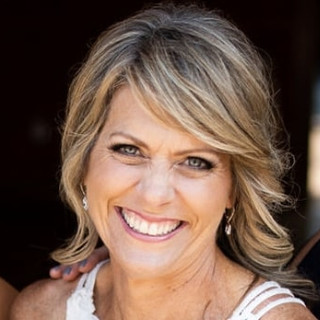
Barb Beck, M.Ed., is a special education teacher and transition specialist with 30+ years helping young adults with disabilities, families and teachers plan life after high school. Student photos are shared with permission, and names are blurred to protect privacy.
Keep going
Learn it: Watch the Lodgeview stories, where my stick figure neighbors practice real skills on the whiteboard.
Use it: See the MyKey apps that turn plans into daily steps.
Teach it: Try Key #8 of My Keys to the Future free, or browse the Bookshelf.
Want help bringing this to your classroom or your family? Book a call with me or email hello@mykeyplans.com.
MyKey Free: The Transition Starter Kit
Free for teachers and families: four printable pages to write a measurable postsecondary goal, check a plan against the 8 Indicator 13 items, bring the right questions to the transition IEP meeting, and start with the student's own voice.


Comments